Chilli SHU Guide | Scoville Heat Units Explained
Introduction
If you are importing, processing, or manufacturing products using red chillies, understanding SHU is essential.
SHU, or Scoville Heat Units, measures the pungency or heat level of a chilli.
Food manufacturers, spice processors, and international buyers often specify a required SHU range to ensure product consistency.
In this guide, you’ll learn what SHU means, how it is measured, why it matters in chilli exports, and how popular Indian chilli varieties compare.
What is SHU?
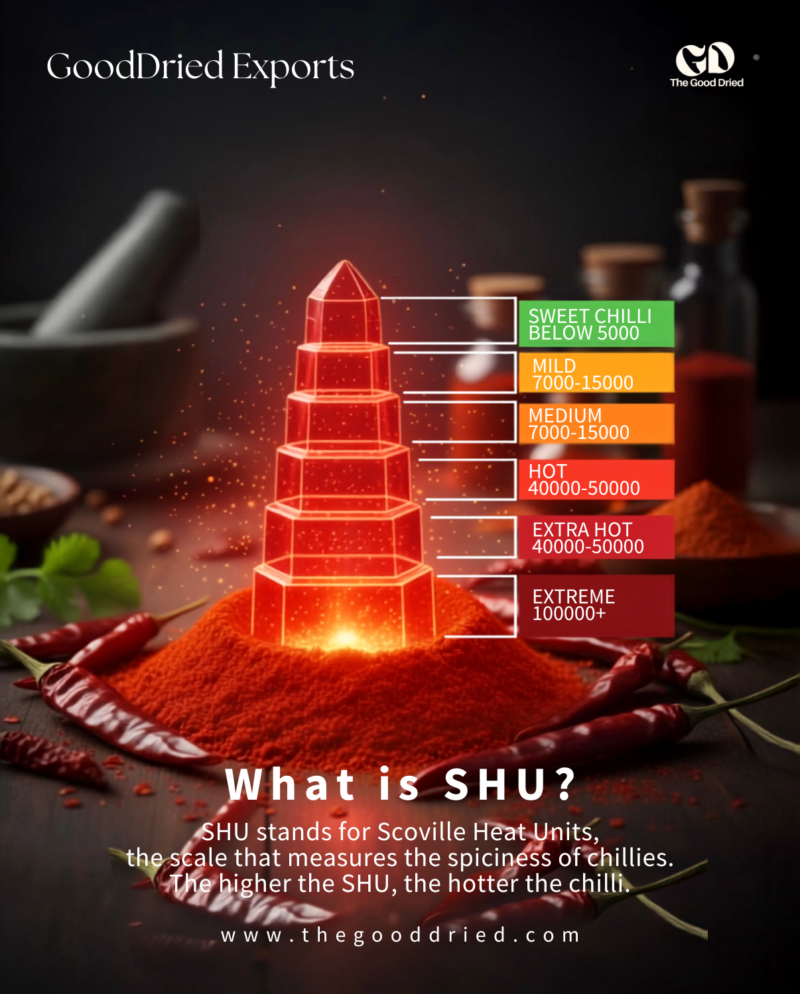
SHU stands for Scoville Heat Units.
It is the internationally accepted scale used to measure the heat or pungency of chilli peppers.
The higher the SHU value, the hotter the chilli.
A chilli with a lower SHU provides milder heat, while a higher SHU indicates stronger pungency.
Why is SHU Important?
Heat level directly affects the flavour profile and intended use of a chilli.
Different industries require different SHU ranges depending on the final product.
For example:
- Sauce manufacturers may require very high SHU.
- Spice blenders often prefer balanced heat.
- Snack manufacturers may require moderate pungency.
- Oleoresin producers frequently select chillies with higher SHU values.
Specifying SHU helps ensure consistency across production batches.
How is SHU Measured?
Historically, the Scoville Scale was determined through taste testing.
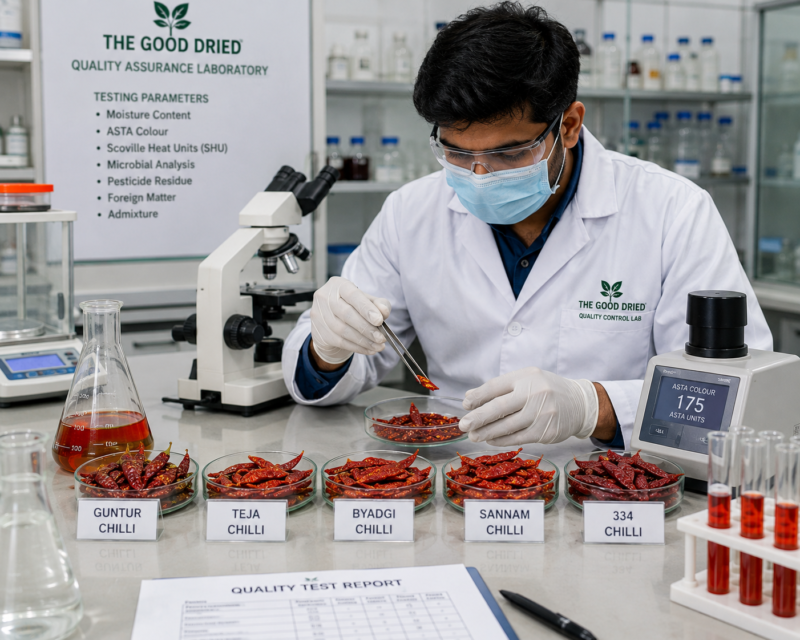
Today, laboratories commonly use scientific methods such as High-Performance Liquid Chromatography (HPLC) to measure capsaicinoid content.
The results are then expressed as Scoville Heat Units.
Laboratory testing provides more consistent and accurate measurements than traditional sensory testing.
SHU Comparison of Popular Indian Chilli Varieties
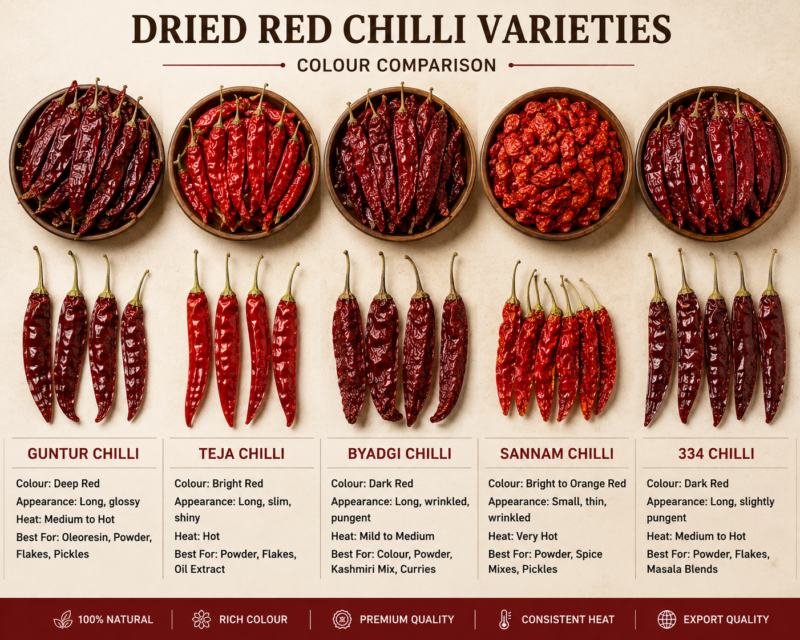
Different chilli varieties naturally contain different heat levels.
| Chilli Variety | Typical SHU Range | Heat Level | Common Applications |
|---|---|---|---|
| Teja | 50,000–100,000 | Very High | Oleoresin, hot sauces |
| Guntur Sannam | 15,000–35,000 | Medium–High | Chilli powder, masalas |
| Byadgi | 8,000–15,000 | Mild–Medium | Paprika, colour extraction |
| 334 Chilli | 20,000–40,000 | Medium–High | General food processing |
| Wonder Hot | 80,000+ | Extremely High | Industrial food applications |
Note: SHU values are approximate and can vary depending on variety, growing conditions, harvest timing, and testing methods.
SHU vs ASTA Color
Many buyers confuse SHU with ASTA Color.
However, these measurements evaluate different characteristics.
| SHU | ASTA Color |
|---|---|
| Measures heat | Measures colour intensity |
| Indicates pungency | Indicates red pigmentation |
| Used for flavour selection | Used for appearance selection |
A chilli can have high SHU but moderate ASTA, or high ASTA with relatively low SHU.
Professional buyers often specify both values when placing export orders.
Factors That Affect SHU
Several factors influence the final heat level of a chilli.
These include:
- Chilli variety
- Climate
- Soil conditions
- Irrigation
- Harvest maturity
- Drying method
- Storage conditions
Proper harvesting and storage help preserve the chilli’s natural pungency.
Choosing the Right SHU for Your Product
Different food products require different heat levels.
Chilli Powder
Medium to high SHU is commonly preferred for balanced flavour.
Hot Sauces
High SHU varieties are often selected to achieve intense heat.
Oleoresin Extraction
Very high SHU chillies are widely used because they contain higher concentrations of capsaicinoids.
Snack Seasonings
Manufacturers often choose moderate SHU levels to appeal to a wider consumer base.
Quality Parameters to Check Along with SHU
SHU should always be evaluated alongside other important quality specifications.
These include:
- ASTA Color
- Moisture percentage
- Foreign matter
- Stem content
- Broken percentage
- Aflatoxin reports
- Pesticide residue reports
- Microbiological analysis
Evaluating multiple quality parameters provides a more complete understanding of the product.
Why Choose The Good Dried?
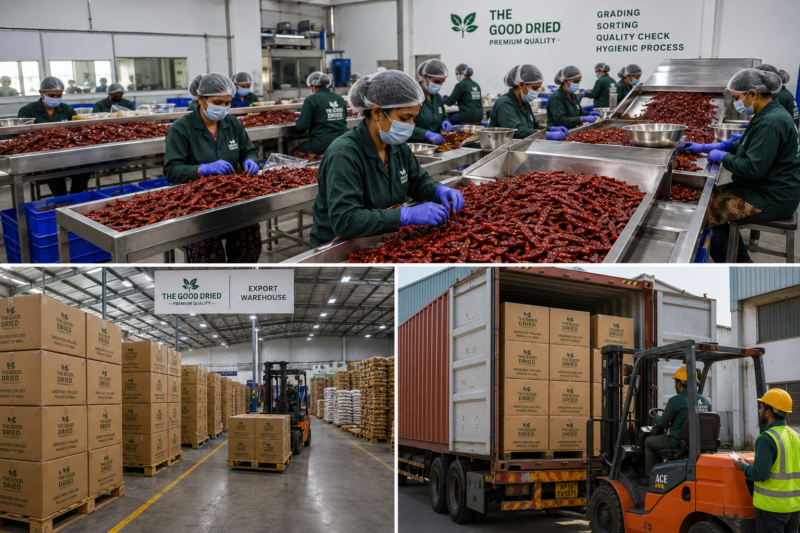
At The Good Dried, we supply premium export-quality Indian chillies with specifications tailored to buyer requirements.
Our team supports international buyers with:
- Customized SHU ranges
- Multiple chilli varieties
- Export-grade packaging
- Quality inspection
- Documentation assistance
- Reliable global shipping
Whether you require mild, medium, or high-pungency chillies, we can help source products that meet your exact specifications.
Frequently Asked Questions
What does SHU stand for?
SHU stands for Scoville Heat Units, the standard measurement used to indicate the heat level of chillies.
Which Indian chilli has the highest SHU?
Teja Chilli and Wonder Hot Chilli are among the hotter commercial Indian chilli varieties, although exact SHU values vary by crop and testing results.
Is SHU the same as ASTA Color?
No.
SHU measures heat, while ASTA Color measures colour intensity.
Why do importers specify SHU?
SHU helps buyers receive chillies with a consistent heat level that matches their product formulation.
Can SHU vary between harvests?
Yes.
Weather, soil, cultivation practices, and harvest timing can all influence the final SHU.
Conclusion
SHU is one of the most important quality parameters in the global chilli trade because it provides a standardized way to measure pungency.
Understanding SHU helps importers choose the right chilli variety, maintain product consistency, and meet customer expectations.
When sourcing Indian chillies, buyers should evaluate SHU together with ASTA Color, moisture content, and laboratory test reports to make informed purchasing decisions.
Call to Action
Looking for Export-Quality Indian Chillies?
The Good Dried supplies premium Indian chillies with customized SHU specifications, export-grade packaging, and worldwide shipping support.
Contact us today to request samples, technical specifications, or a quotation.
Website – https://thegooddried.com/
LinkedIn – https://www.linkedin.com/in/aakashkotturi/
Instagram – @gooddried
Suggested Articles
Chilli Supplier from India: Premium Export-Quality Red Chillies
Bulk Chilli Supplier: Premium Export-Quality Red Chillies from India
Red Chilli Exporter from India | Premium Dry Red Chillies Worldwide
ASTA Color Explained: What It Means in Chilli Exports
How to Import Chilli from India: 9-Step Complete Guide for International Buyers
Teja vs Sannam Chilli: Which Indian Chilli Is Better for Export?
Best Indian Chilli Exporter: 10 Factors Buyers Should Check
Guntur Chilli vs Byadgi Chilli: Which Indian Chilli Is Better for Export?