Indian Spice Exporter: How to Choose the Right Supplier
India has a long history of producing and exporting spices to international markets, making the country an important sourcing destination for importers, food manufacturers, distributors and spice companies.
For buyers looking for an Indian spice exporter, choosing the right supplier is about more than finding the lowest price.
Product quality, consistency, specifications, documentation, packaging, food safety and reliable shipment handling can all influence the success of an international spice purchase.
This guide explains what international buyers should look for when selecting a spice exporter from India.
Why Source Spices from India?
India is one of the world’s major producers and exporters of spices and spice products.
According to the Spices Board, India exported 17.34 lakh tonnes of spices and spice products valued at approximately US$4.43 billion during 2025–26.
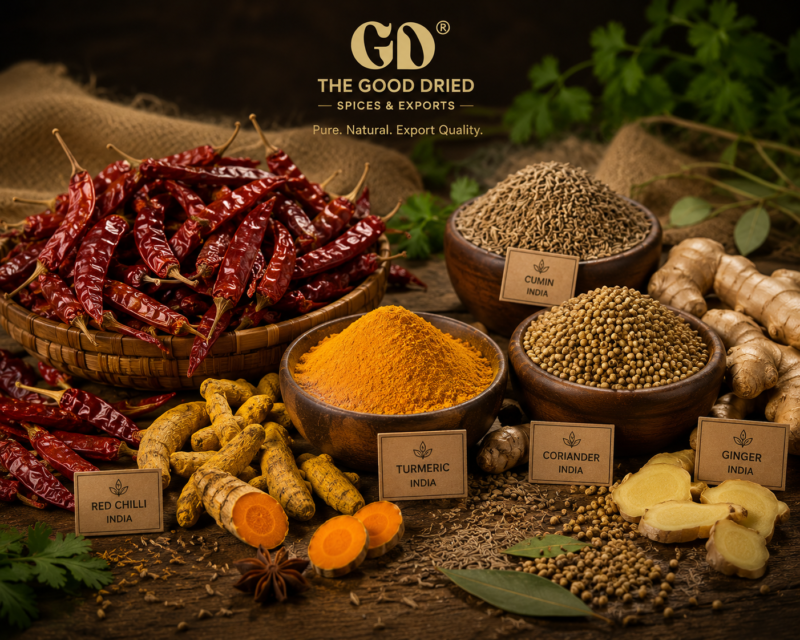
India’s spice export basket includes products such as chilli, cumin, turmeric, cardamom, ginger, pepper, coriander, spice oils, oleoresins and curry products.
Indian spices are exported to markets across Asia, the Middle East, Europe, North America and other regions.
The Spices Board reports that major destinations include the United States, China, the UAE, Bangladesh, Saudi Arabia, the United Kingdom, Thailand and Malaysia.
Link “spices from India”
What Does an Indian Spice Exporter Do?
An Indian spice exporter connects international buyers with spice products sourced, processed or supplied from India.
Depending on the business model, an exporter may work directly with farmers, processors, manufacturers, market suppliers or multiple sourcing partners.
A professional exporter can coordinate product sourcing, quality specifications, testing, packaging, documentation and international shipment arrangements.
For buyers, this can simplify the process of sourcing Indian spices for commercial use.
Types of Spices You Can Source from India
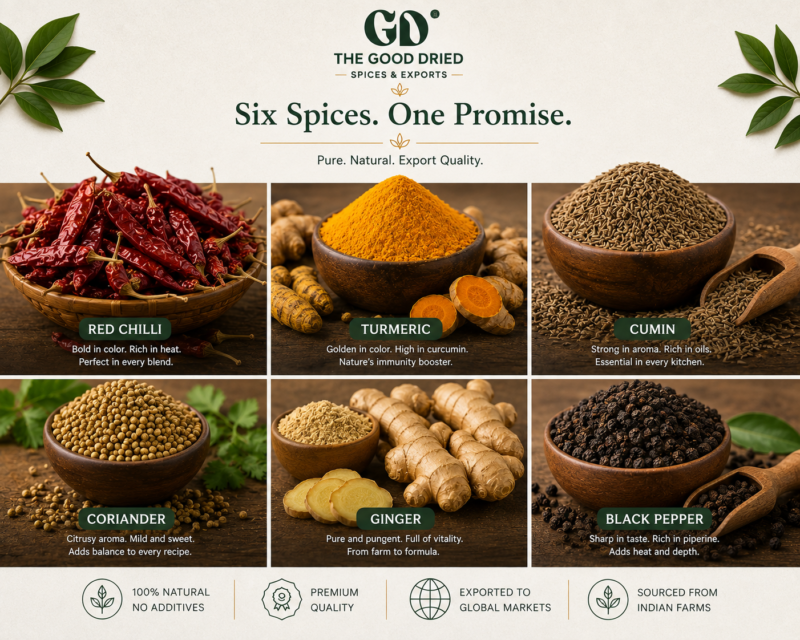
International buyers can source a wide range of whole spices, ground spices and value-added spice products from India.
Red Chilli
Indian red chilli is available in different varieties and specifications depending on colour, pungency, size, stem condition and intended application.
Common commercial varieties include Teja, Sannam, S17, 334 and Byadgi, among others.
Link “Indian red chilli”
Turmeric
Indian turmeric is available primarily as whole turmeric fingers and turmeric powder.
Buyers can specify requirements such as curcumin content, moisture, cleanliness, size and packaging according to their application.
Link “turmeric supplier”
Cumin
Indian cumin is widely used in spice blends, food manufacturing and seasoning applications.
Buyers may specify requirements related to purity, moisture, appearance, volatile oil and other quality parameters.
Coriander
Indian coriander is available in whole and powdered forms for food processing, seasoning and spice-blending applications.
Ginger
Indian ginger can be supplied in different forms, including dried ginger, ginger powder and other processed formats.
Black Pepper
Indian black pepper is available in whole and processed forms and is used across food manufacturing, seasoning and spice applications.
How to Choose the Right Indian Spice Exporter
Choosing an Indian spice exporter should begin with evaluating the supplier’s ability to consistently meet your specifications.
1. Check Product Specifications
Before discussing price, clearly define the product specification you require.
- Product name
- Variety
- Whole or powdered form
- Moisture
- Colour
- Pungency or heat level where applicable
- Curcumin percentage for turmeric where applicable
- Mesh size for powders
- Foreign matter limits
- Microbiological requirements
- Packaging
- Quantity
A professional supplier should be able to discuss these specifications clearly rather than quoting only a generic product name.
2. Ask for a Product Sample
Requesting a representative sample is an important step before placing a commercial order.
Buyers can evaluate the sample against their required specifications and application.
For larger orders, buyers may also request laboratory analysis or a Certificate of Analysis for the relevant lot.
3. Evaluate Quality Control
Quality control is particularly important when purchasing spices for international food markets.
Buyers should ask how the supplier handles sorting, cleaning, processing, storage and testing.
Depending on the destination market and product, additional testing may be required for parameters such as microbiological contamination, pesticide residues, aflatoxins, heavy metals or other food-safety requirements.
Buyer Tip: Do not assume that a supplier’s product specification automatically guarantees compliance with your destination country’s regulations. Confirm the requirements before shipment.
4. Check Export Documentation
International spice shipments require appropriate commercial and export documentation.
- Commercial invoice
- Packing list
- Certificate of Origin where required
- Bill of Lading
- Phytosanitary documentation where applicable
- Health or other certificates where required
- Certificate of Analysis where applicable
- Other destination-specific documents
Documentation requirements can vary depending on the product and destination market.
Buyers should therefore confirm the required documents before finalising the shipment.
5. Check Export Registration and Credentials
Buyers should verify the supplier’s business and export credentials before entering into a commercial transaction.
The Spices Board operates the Certificate of Registration as Exporter of Spices, commonly referred to as CRES, for spice exporters in India.
The Spices Board’s registration system currently lists thousands of registered merchant and manufacturer exporters.
Buyers can also request relevant company documentation and verify information before placing an order.
Merchant Exporter vs Manufacturer Exporter
International buyers may encounter both merchant exporters and manufacturer exporters when sourcing spices from India.
Merchant Exporter
A merchant exporter typically sources products from manufacturers, processors, farmers or other suppliers and handles the export transaction.
This model can provide access to a wider range of products and sourcing locations.
Manufacturer Exporter
A manufacturer exporter operates its own processing or manufacturing facility and exports products produced or processed by the company.
This can provide greater direct control over certain processing and quality-control stages.
Neither model is automatically better for every buyer.
The important consideration is whether the supplier can consistently meet your required specification, quality and shipment requirements.
What Quality Parameters Should Spice Buyers Check?
The appropriate quality parameters depend on the specific spice and intended application.
- Moisture
- Foreign matter
- Product purity
- Colour
- Size and appearance
- Pungency for chilli
- Curcumin content for turmeric
- Volatile oil where applicable
- Mesh size for powders
- Microbiological parameters
- Pesticide residues
- Aflatoxins
- Heavy metals
- Other destination-specific requirements
Buyers should provide their complete specification to the exporter before requesting a final quotation.
Link “spice quality parameters”
Why Consistency Matters in Spice Imports
Consistency is one of the most important factors for food manufacturers and commercial spice buyers.
A supplier may provide an attractive first shipment, but long-term buyers need predictable quality across repeated orders.
Consistency can include colour, moisture, pungency, particle size, cleanliness, packaging and other agreed specifications.
This is why buyers should evaluate a supplier’s ability to maintain specifications rather than focusing only on the price of one shipment.
Packaging Options for Export Spices
Indian spices can be packed according to the product, quantity, destination and buyer requirements.
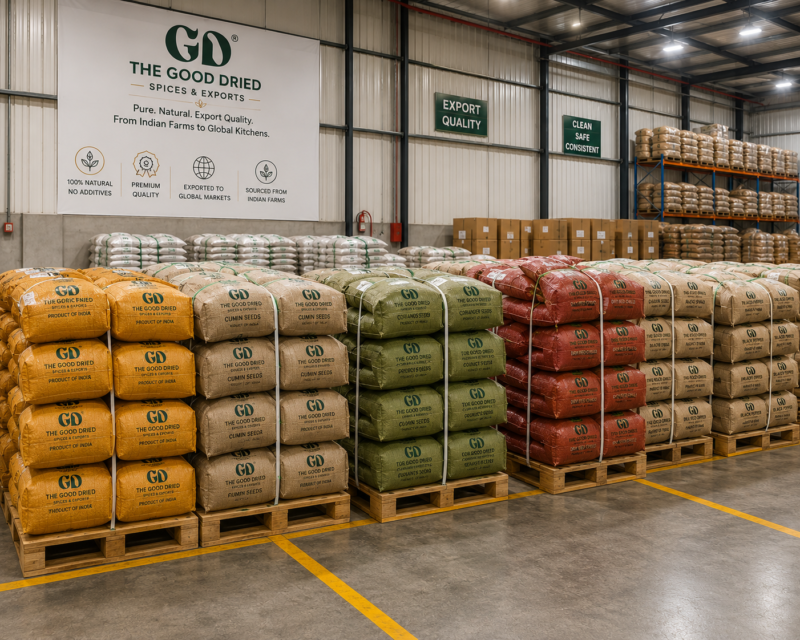
Common commercial packaging formats include bulk bags, woven sacks with suitable inner liners, paper bags, cartons and customised packaging.
Powdered spices may require packaging that protects the product from moisture, contamination and handling damage.
Buyers should discuss packaging requirements with the exporter before confirming the order.
Indian Spice Export Process
A typical spice export transaction begins with the buyer sharing product specifications and quantity requirements.
The exporter then confirms availability, specifications and pricing.
Samples may be exchanged and tested before the order is confirmed.
After commercial terms are agreed, the exporter prepares the goods, packaging and required documentation.
The shipment is then arranged according to the agreed Incoterm, such as FOB or CIF.
The cargo is transported to the destination port and the required export and shipping documentation is provided to the buyer.
Link “FOB or CIF”
What Should You Ask an Indian Spice Exporter?
Before placing an order, international buyers should ask the exporter specific questions about the product and shipment.
- What spice varieties do you supply?
- What are the available specifications?
- Can you provide a product sample?
- Can you provide a Certificate of Analysis?
- What are the minimum order quantities?
- What packaging options are available?
- What is the production or sourcing capacity?
- What export documentation can you provide?
- Which Incoterms do you offer?
- Which ports can you ship from?
- What payment terms are available?
- Can you handle repeat orders with consistent specifications?
Clear answers to these questions can help buyers compare suppliers more effectively.
Red Flags When Choosing a Spice Exporter
Buyers should be cautious when a supplier is unable or unwilling to provide basic information about the product and transaction.
- Extremely low prices without a clear explanation
- No product specifications
- No sample before a large order
- Refusal to provide relevant business documentation
- Unclear payment terms
- Inconsistent product information
- No quality documentation where required
- Pressure to make immediate payment
- Unclear company identity or physical business presence
A reliable exporter should be transparent about product specifications, commercial terms and documentation.
Why International Buyers Choose Indian Spice Suppliers
India’s large agricultural base, diverse spice production and established export ecosystem make it an important sourcing market for international spice buyers.
India’s spice exports reached a record level in 2024–25, when the country exported 17.99 lakh tonnes of spices and spice products valued at approximately US$4.72 billion.
Government data also states that Indian spices and spice products were exported to around 180 destinations in 2024–25.
For buyers, this established international presence means there is a broad ecosystem of producers, processors, exporters, testing facilities and logistics providers.
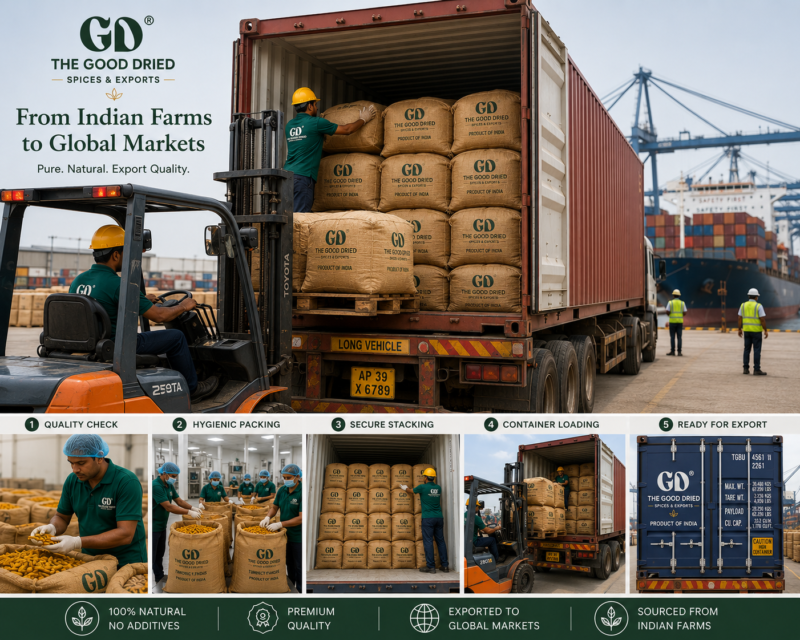
The Good Dried — Indian Spice Exporter
At The Good Dried, we focus on sourcing and supplying Indian agricultural ingredients and spices for international buyers.
Our product focus includes Indian red chilli, turmeric and other dehydrated ingredients and spices.
We work with buyers who require bulk quantities, defined product specifications and export-oriented supply.
For a new enquiry, buyers can share the required product, variety, specification, quantity, packaging and destination port.
Based on these requirements, we can discuss sourcing, quality specifications, packaging and export terms.
Request an Indian Spice Export Quote
Tell us what spice you need, your required specification, quantity and destination, and our export team can help you evaluate the sourcing options.
Final Thoughts
Choosing the right Indian spice exporter is not simply about finding the cheapest quotation.
International buyers should evaluate product quality, specifications, testing, documentation, packaging, export capability and consistency.
A reliable supplier should be able to clearly communicate what they are supplying and how the product meets the buyer’s requirements.
By evaluating these factors before placing an order, importers can build stronger and more reliable long-term sourcing relationships with Indian spice suppliers.
Frequently Asked Questions
How do I find an Indian spice exporter?
International buyers can search for Indian spice exporters through industry directories, trade platforms, trade fairs and official industry organisations, and should verify the supplier’s credentials before placing an order.
What spices can I import from India?
Buyers can source products such as red chilli, turmeric, cumin, coriander, ginger, black pepper, cardamom and various spice blends and value-added spice products from India.
How do I check the quality of Indian spices?
Buyers should define product specifications, request samples and use appropriate laboratory testing and documentation such as a Certificate of Analysis where required.
Can Indian spice exporters supply bulk quantities?
Yes, Indian spice exporters can supply commercial and bulk quantities, although minimum order quantities and available capacity vary by supplier and product.
What should I include in a spice import enquiry?
A buyer enquiry should ideally include the spice name, variety, specification, quantity, packaging requirement, destination port, required Incoterm and any applicable food-safety or certification requirements.
Contact us today to request samples, technical specifications, or a quotation.
Website – https://thegooddried.com/
LinkedIn – https://www.linkedin.com/in/aakashkotturi/
Instagram – @gooddried
Suggested Articles
Red Chilli Exporter from India
How to Import Chilli from India
Spice Quality Standards
FOB vs CIF
Indian Spices in Global Markets
How to Import Turmeric from India